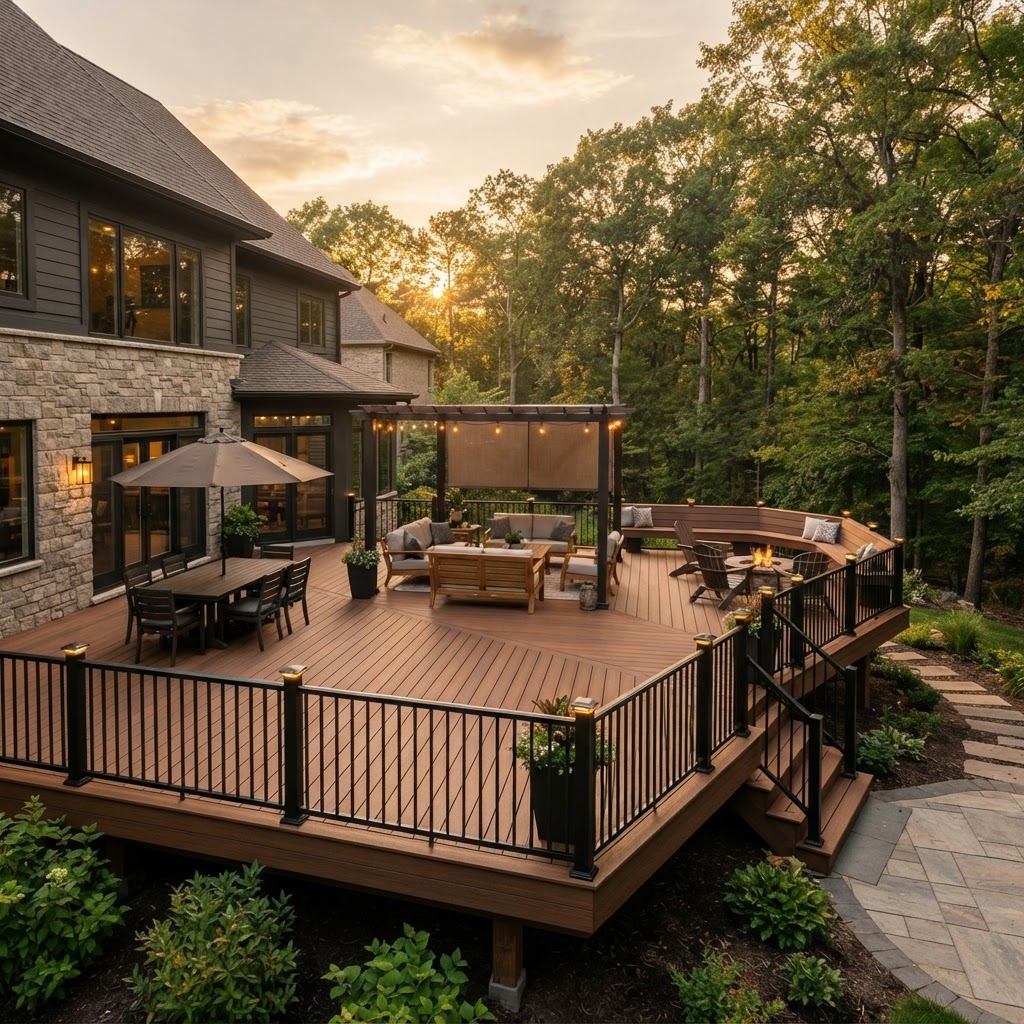
A new deck is one of the best ways to add usable living space to your home, and the material you choose shapes how it looks, how long it lasts, and how much weekend work it takes to keep it that way. The two big camps are composite (and PVC) and natural wood.
Composite and PVC: build it and enjoy it
Composite and PVC decking cost more up front, but they're the lowest-maintenance option by far. No staining, no sealing, no splinters, just an occasional wash. They resist moisture, rot, and fading, and they carry long warranties, often 25 years or more. For homeowners who'd rather use their deck than maintain it, this is usually the better long-term value.
Cedar and pressure-treated wood: natural and affordable
Real wood has a warmth and grain that some homeowners love, and it costs less to build. Cedar resists rot naturally and looks beautiful; pressure-treated pine is the most budget-friendly option. The tradeoff is upkeep: wood decks need regular cleaning, sealing, and staining to hold up to our humidity and sun, and they don't last as long as composite.
Quick comparison
- Lowest maintenance: composite or PVC
- Longest lifespan: PVC, then composite
- Lowest up-front cost: pressure-treated wood
- Most natural look: cedar
- Best long-term value for most homes: composite
How to decide
Ask yourself how long you plan to stay, how much upkeep you're realistically willing to do, and what look you want. If you want to build it once and barely think about it again, composite is worth the premium. If up-front budget is the priority and you don't mind seasonal maintenance, wood can be a great fit. Either way, the framing, footings, and ledger connection underneath matter just as much as the boards on top.